
Kohl’s Agent Call-Center Discovery
Build or Buy Case Study
ROLE
Sr. UX Manager and Product Design Lead
TEAM
Designer (1), Product Manager (2)
Engineers (3), Site Reliability Engineer (1)
TIMELINE
4-week exploration,
extended to 12 months
extended to 12 months
PLATFORM
Oracle Service Cloud
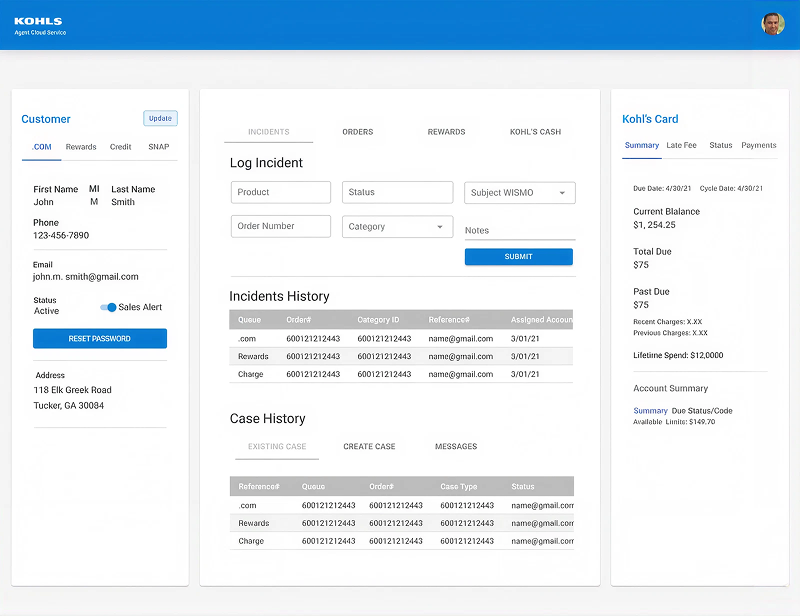
Improve to integrate on Google Cloud Platform
Overview
Kohl’s Agent Desktop is the dashboard agents rely on to support customers across every channel in Kohl’s ecosystem—most often for fulfillment status, Kohl’s Charge, and Kohl’s Rewards. It’s the operational heartbeat of customer service at Kohl’s.
Challenge
- The existing platform couldn’t scale
- Cost was high relative to what it delivered
- Agents lacked the tools to track productivity against First Call Resolution (FCR) goals
Situation
Our team was tasked with exploring a new dashboard—designed to improve agent-customer call outcomes and consolidate the scattered reference points agents used to find account information.
The Team
I, 2 product managers, 3 engineers, and 1 site reliability engineer worked in a Spotify Pod Model. We operated autonomously, staying in close contact with stakeholders and discipline leadership.
Task
I led design end-to-end: facilitating workshops, pairing with PMs and engineering, and driving an agile/lean approach that kept the team focused on what mattered most to end users.
Action
- Shaped and analyzed user stories and the product backlog; partnered with engineering on constraints and design feasibility
- Led research — test plans, user interviews, insight synthesis for stakeholders, and usability testing
- Ran weekly design sessions with the team to review insights, pitch new ideas, and test opportunities
- Produced IA, concepts, and prototypes as tools for team alignment and stakeholder reviews
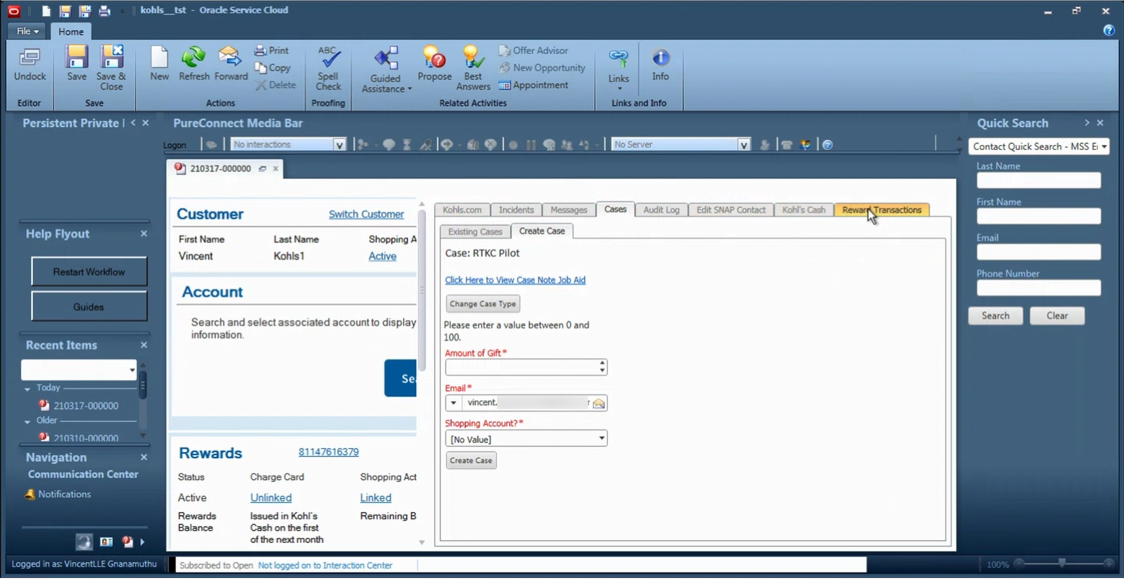
Existing Oracle Cloud Service Platform
Outcomes
Velocity
- Working as a unified team lets us move fast, break down silos, and resolve issues early
Efficiency
- We built the case for a modernized platform — one that would lower long-term costs and deliver a more intuitive experience for agents and customers alike
Strategies
Approach: Facilitation
Using a design thinking approach, I facilitated sessions with agents and other business SMEs to understand how they experienced and used the experience. Our journey began with business stakeholders and a cross-functional (XFN) team to understand the objectives, goals, and strategies.
Through facilitating exercises, I worked with my balanced (XFN) team and conducted workshops and techniques below:
- Affinity Mapping
- Prioritization Exercises 2×2
- Creating hypotheses and problem statements
- Persona (proto) and Journey Mapping exercises
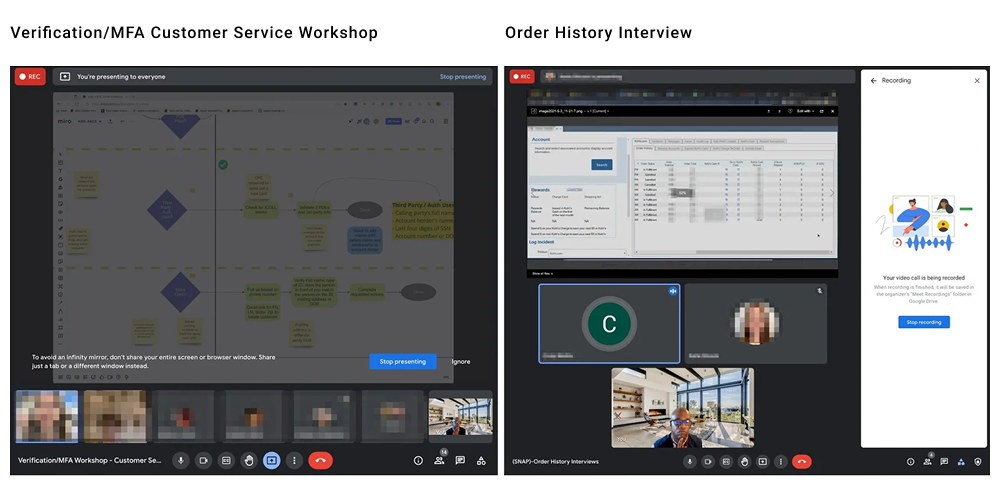
Conducting this and other interviews allowed me to plan, schedule, and facilitate during the discovery phase.
Approach: Research
I helped the team prioritize problems and align with stakeholder goals, then ran working sessions to surface patterns and themes across the discovery work. The team voted on the highest-priority problem, giving us a shared, informed direction.
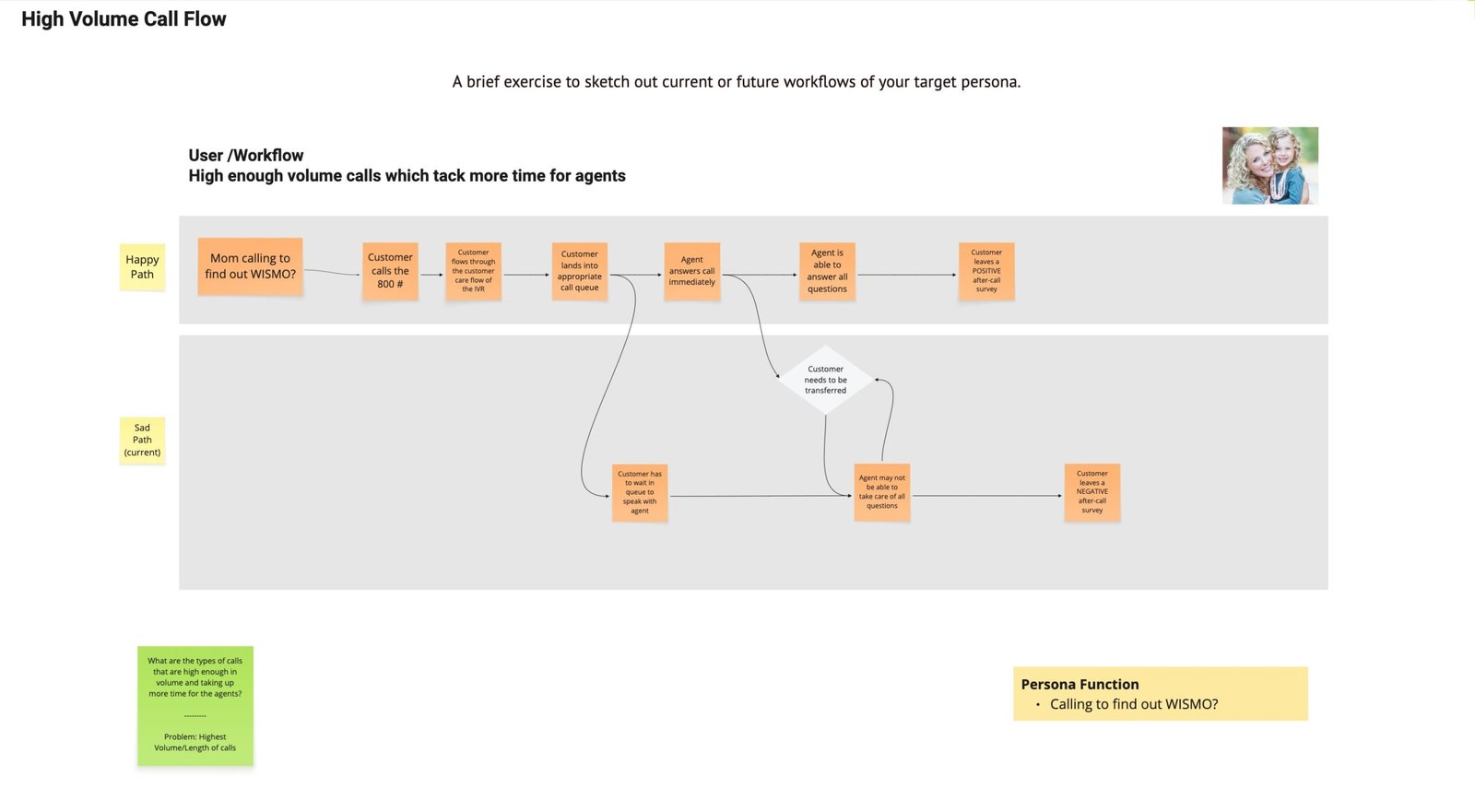
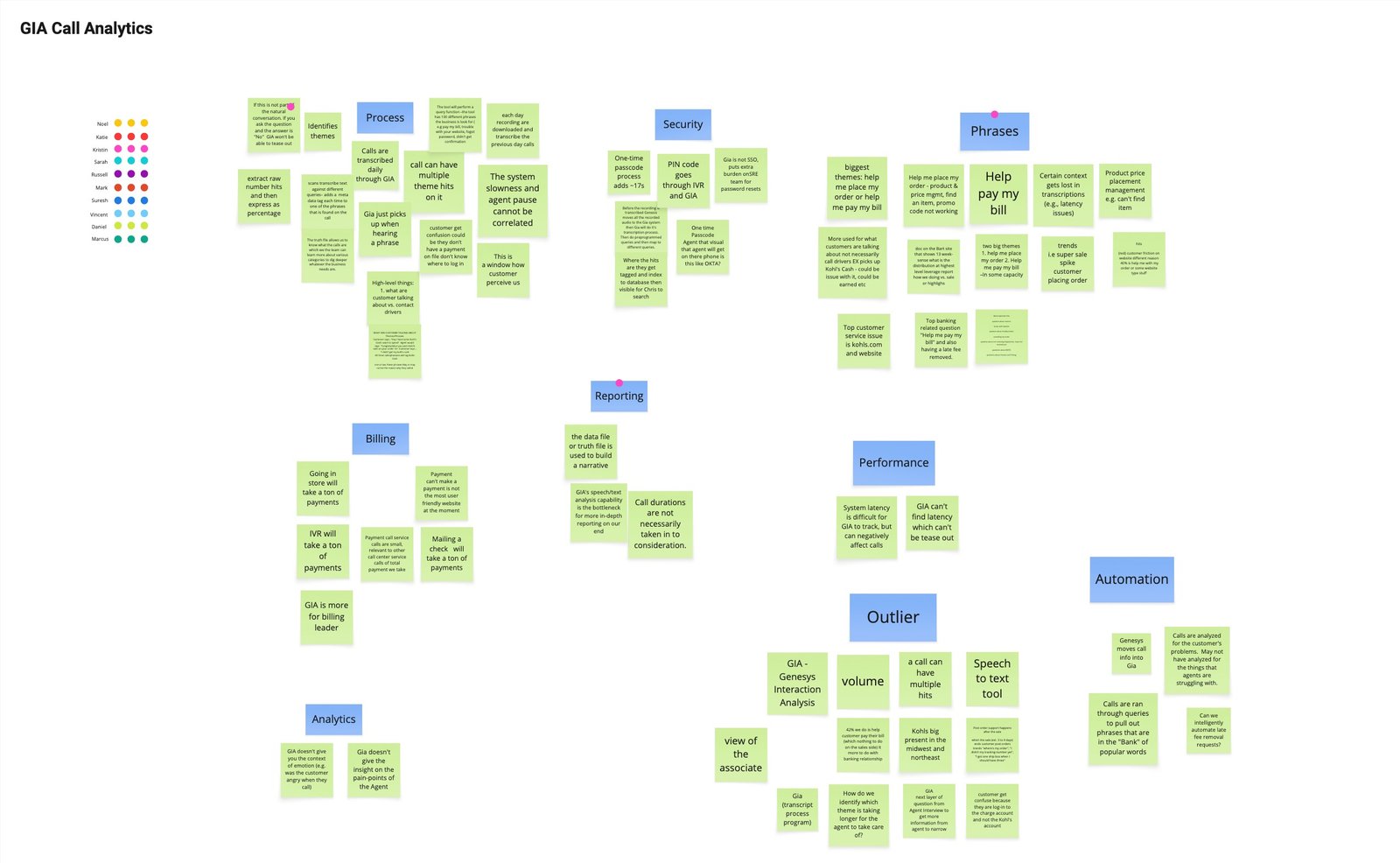
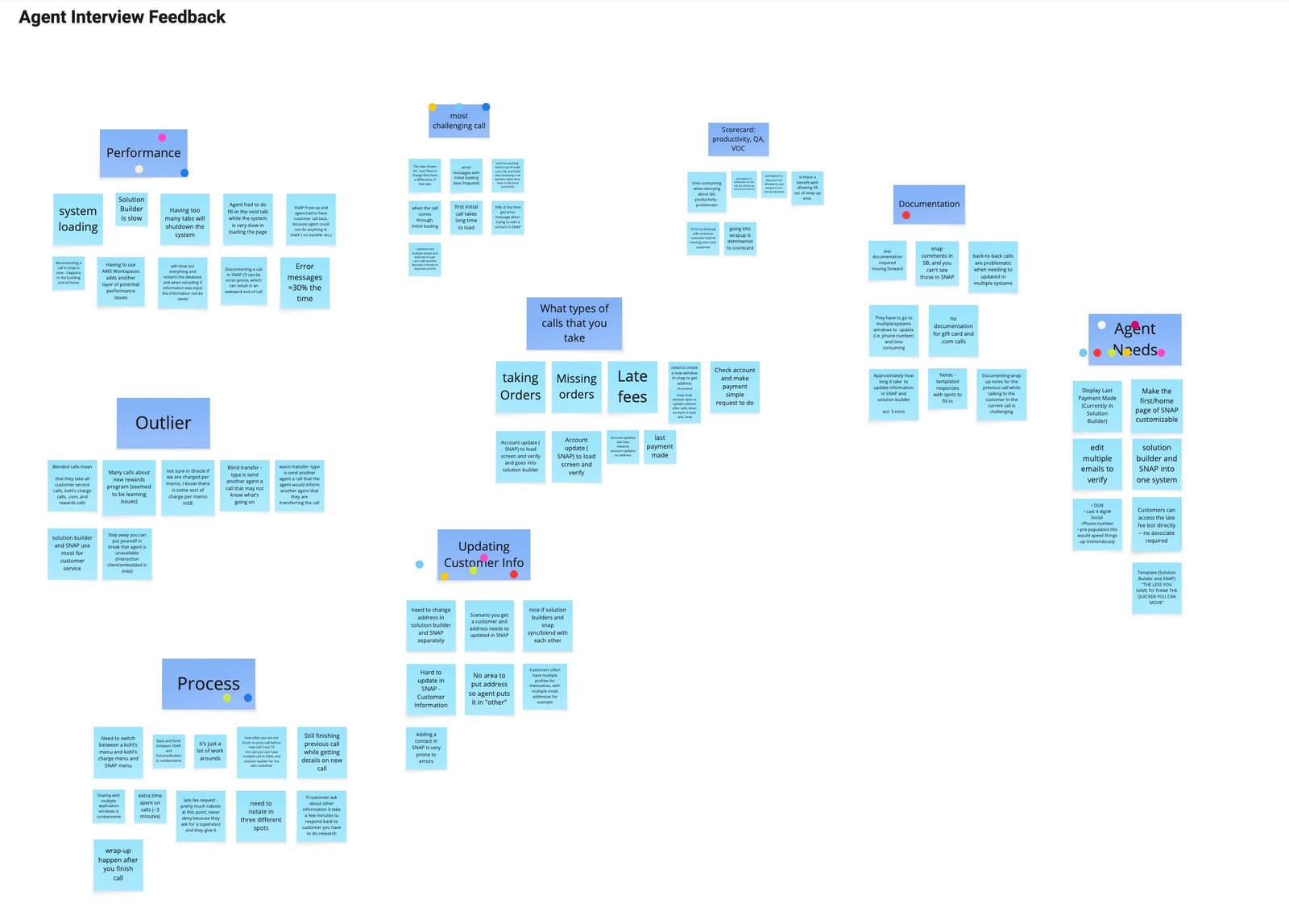
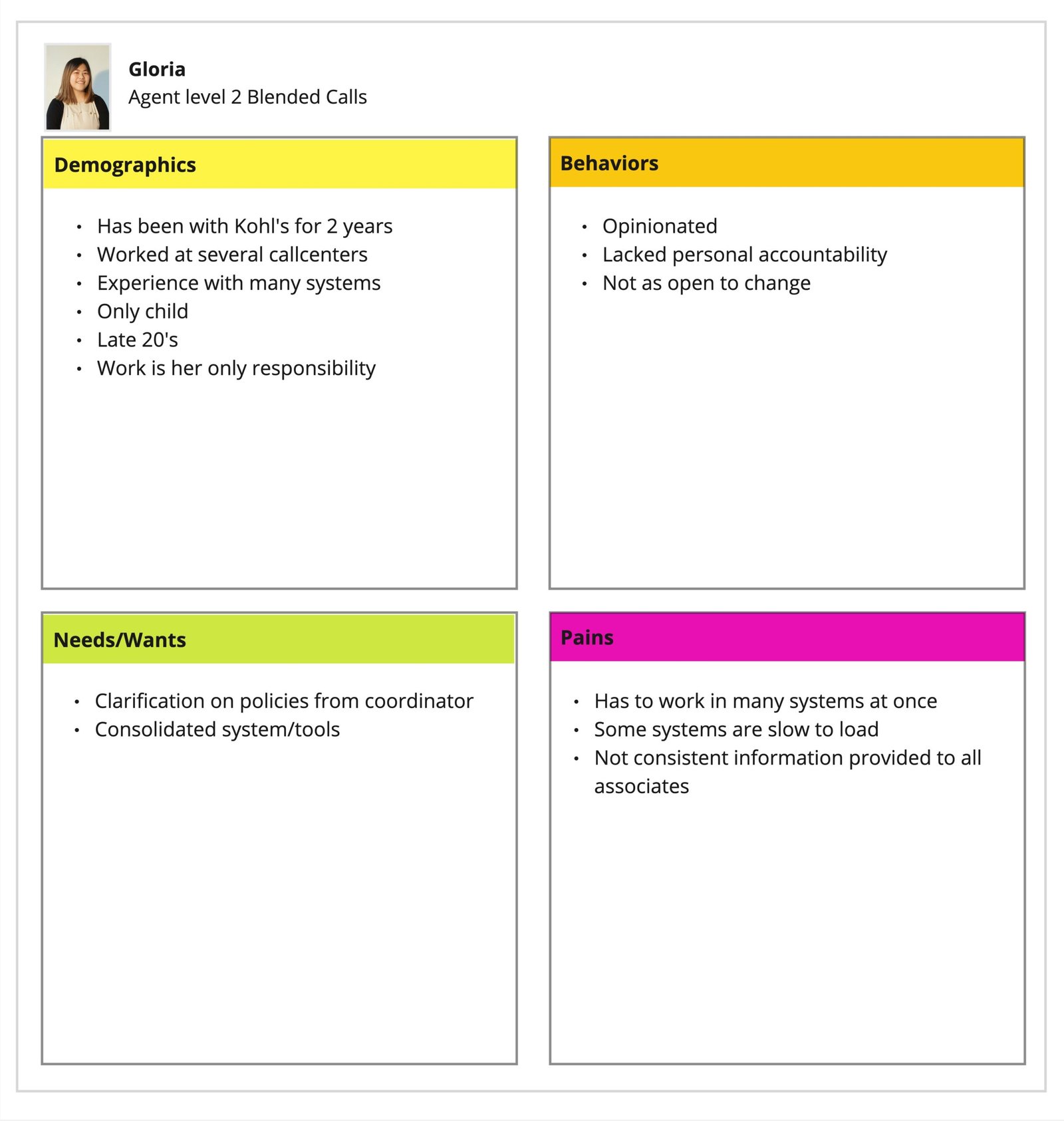
From early interviews, we built proto-personas and journey maps to capture pain points and moments of friction. A scenario storyboard brought one of the most common agent workflows to life — resolving a missing order or waiving a late fee — tracing the emotional highs and lows across the interaction.
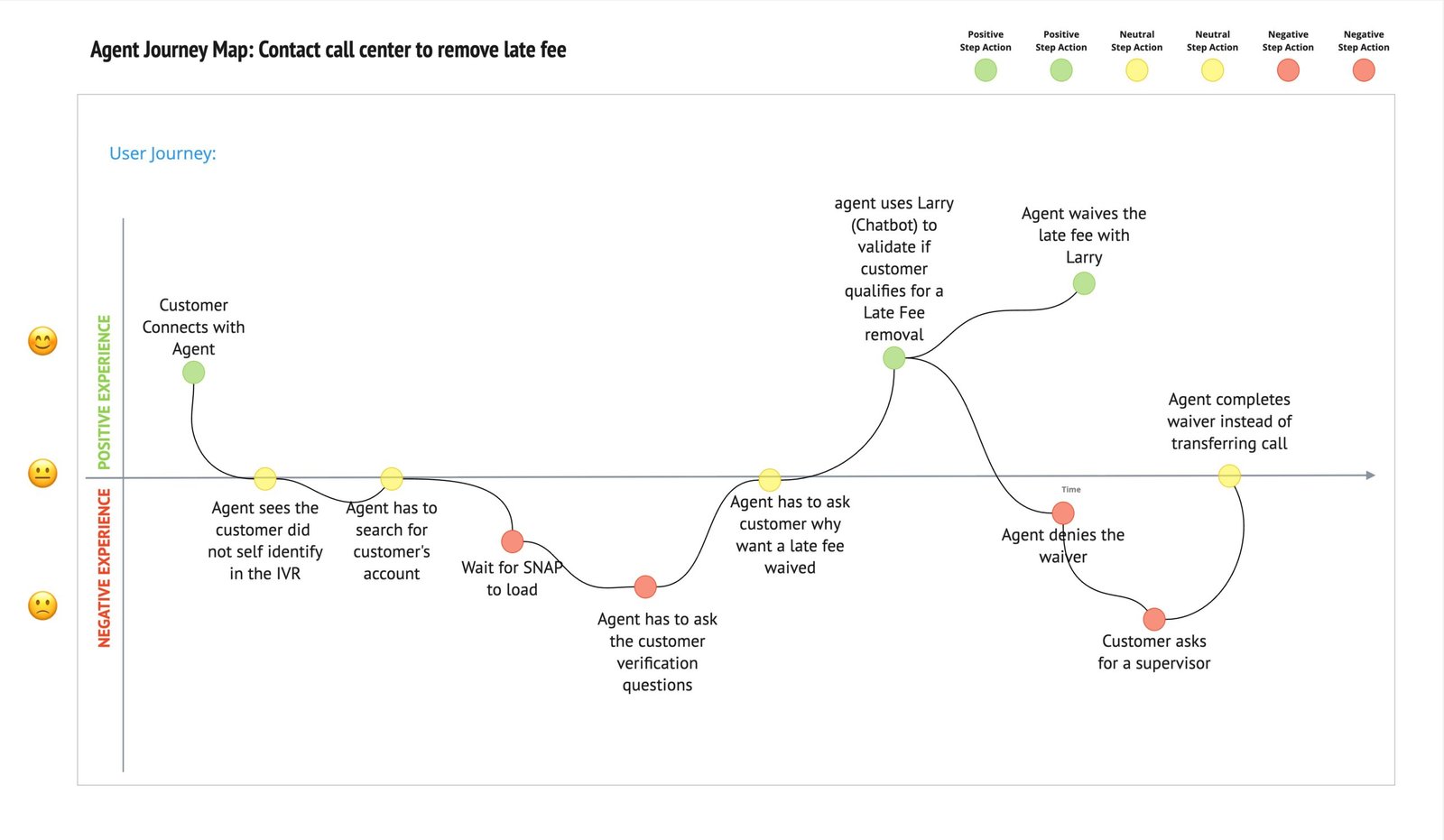
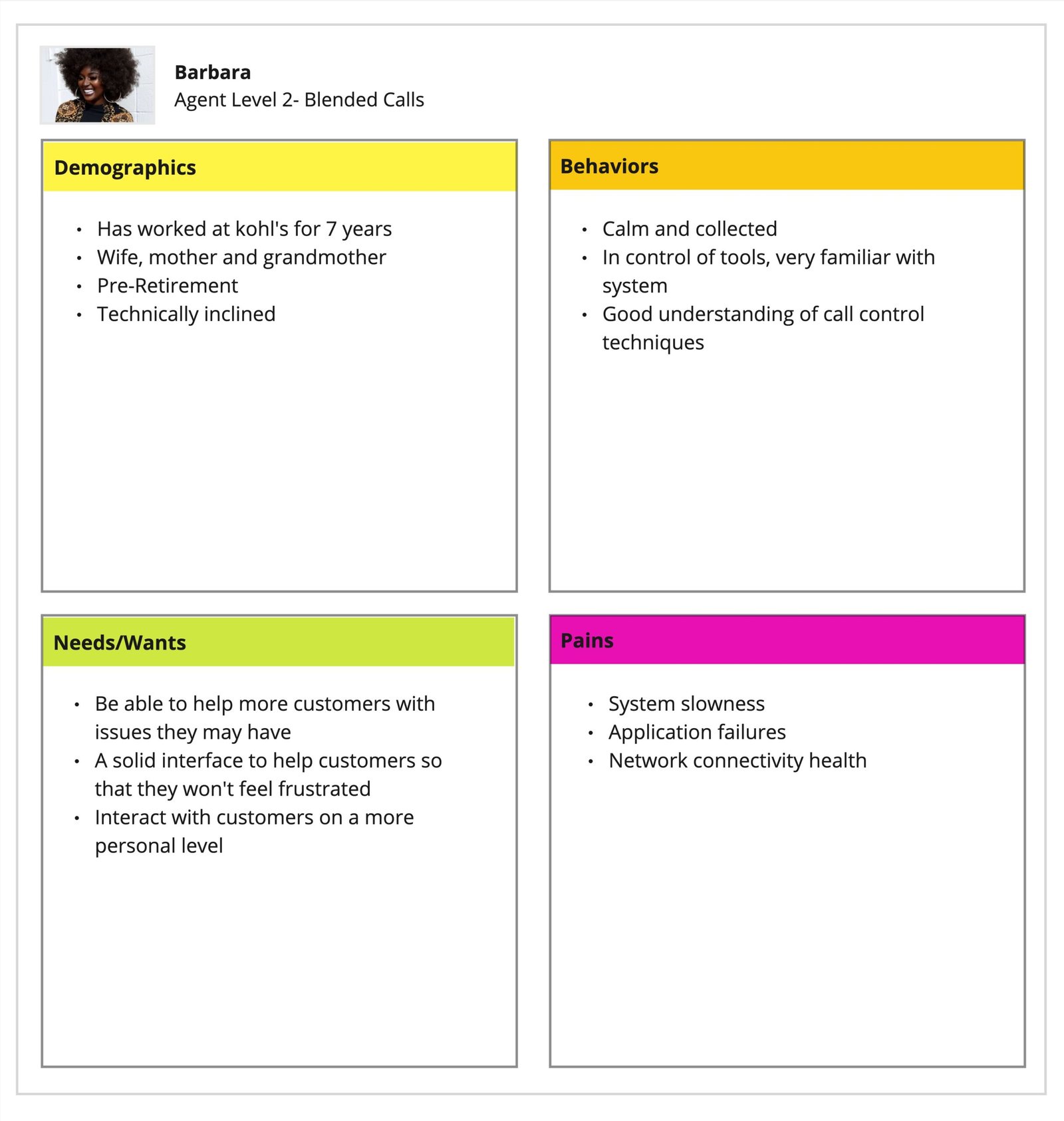
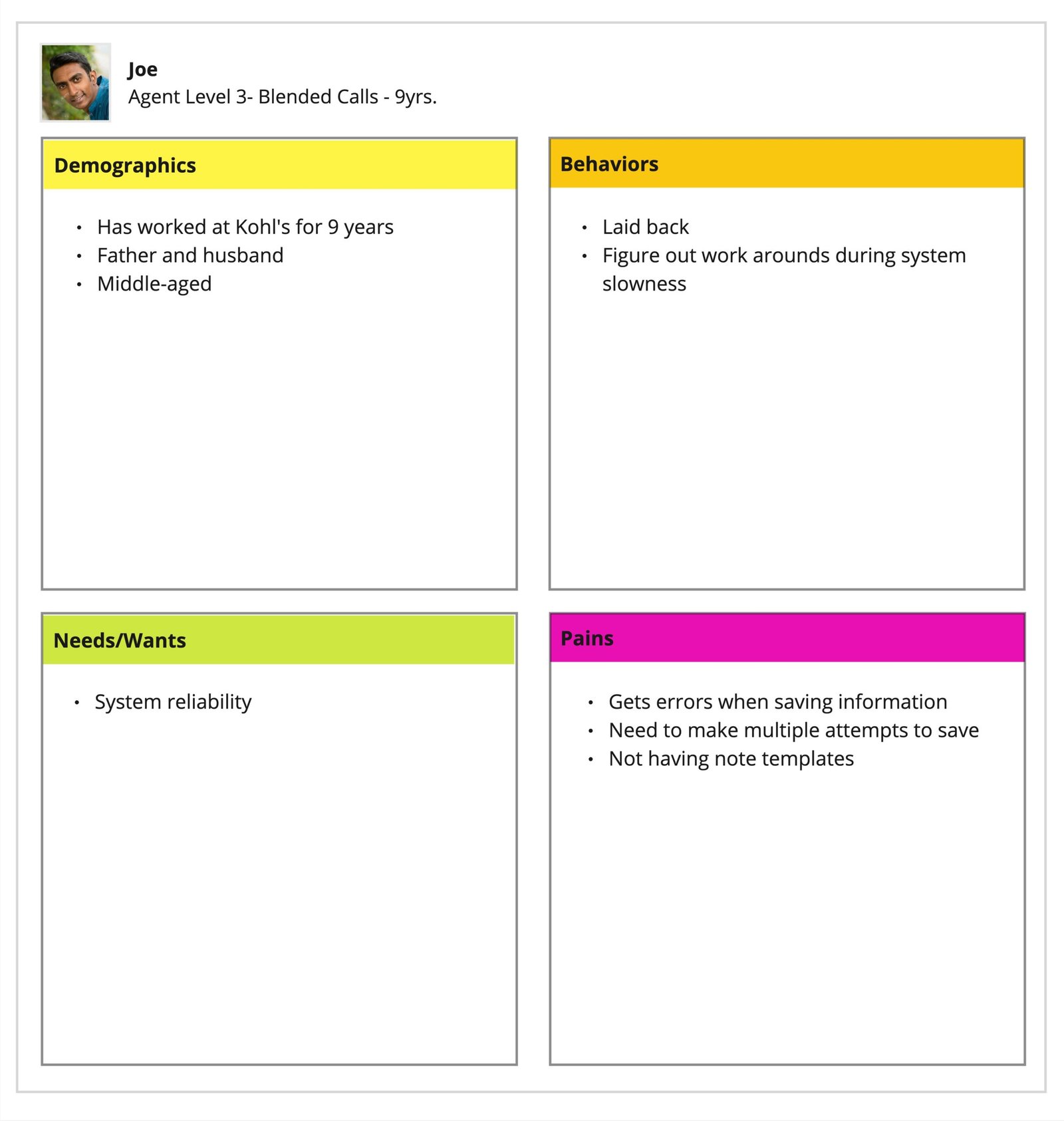
Agent Customer Recording Visualization – Scenario: Customer calls to remove a late fee.

Approach: Experimentation & Testing
Research That Changed the Design
Instead of waiting to have everything aligned to move the project forward, knowing that we as a team had a short runway to prove out the right problem(s) and also achieve business goals and user needs. These techniques helped us get quick feedback and adjust based on what we knew and didn’t know.
Testing with frontline users shaped the customer profile
| 301 | 71% | 96% | 66% |
|---|---|---|---|
| responses collected | preferred Most Valuable Customer (MVC) Status when only one indicator could be surfaced | said the consolidated customer profile would provide the information they needed and streamline the experience | identified Kohl’s Card information as the profile they updated most frequently |
What we learned
MVC status mattered more than lifetime spend.
71.3% of associates selected MVC Status when forced to choose between the two, giving us a clear hierarchy for the customer card.
Associates strongly supported consolidating customer information.
96% said bringing customer information into a single profile would provide the information they needed and create a more streamlined experience.
Kohl’s Card was the highest-priority customer data source.
65.8% identified Kohl’s Card as the customer profile information they updated most frequently, compared with 24.6% for .com and 9.5% for Rewards.
RESEARCH → DESIGN DECISION
MVC became the primary customer indicator
Testing showed associates valued MVC status more than lifetime spend, so we prioritized MVC in the customer card rather than giving both attributes equal visual weight.
Three customer systems became one profile experience
The 96% positive response gave us confidence to move toward a consolidated profile while preserving the source context associates needed.
Frequent tasks influenced the information hierarchy
Because Kohl’s Card represented nearly two-thirds of the profile updates, we gave that information appropriate prominence and accessibility within the unified experience.
Approach: Solution
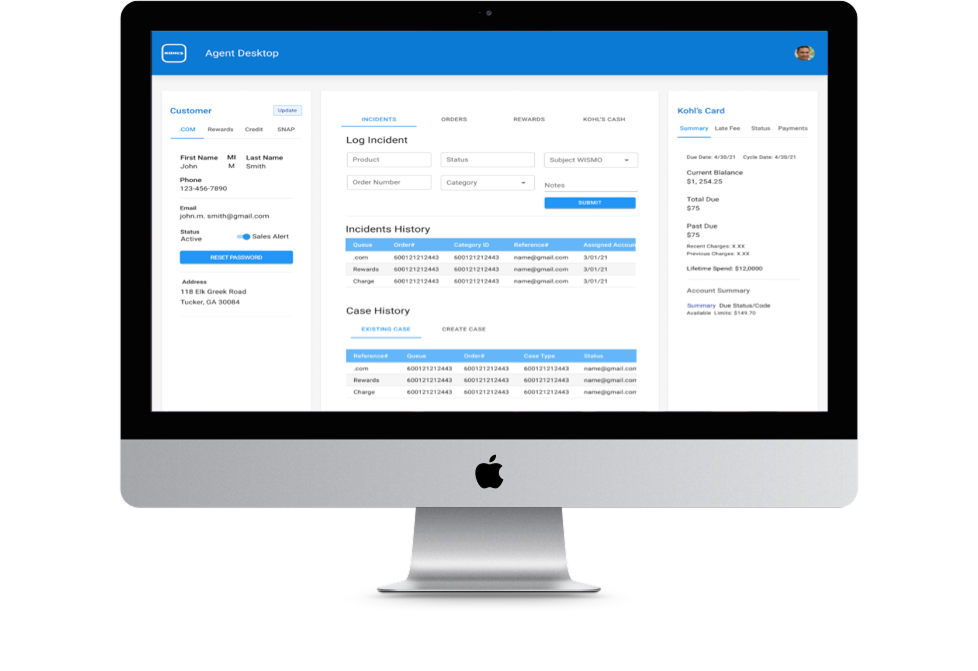
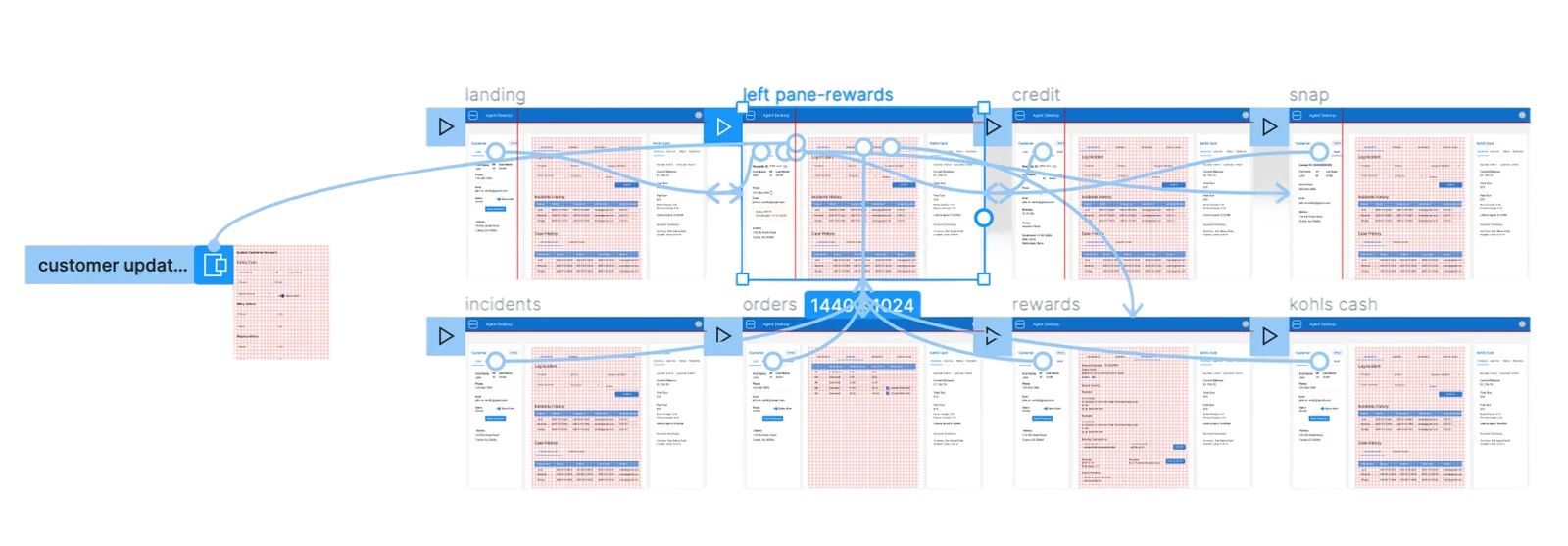
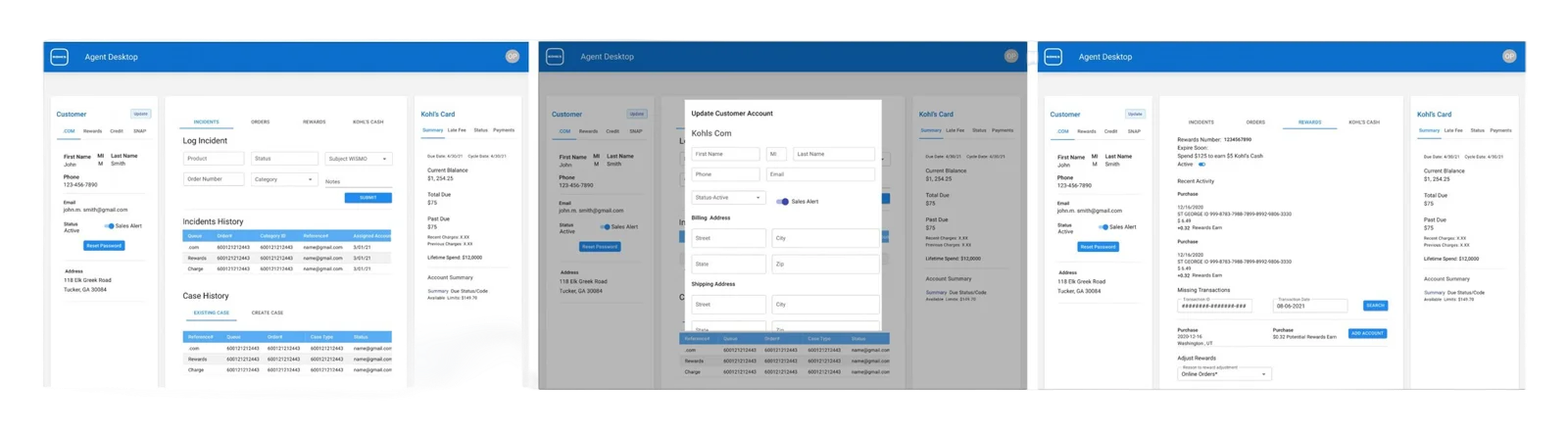
The prototype below is the product of that discovery and collaboration — built with engineering and continuously refined through ongoing testing. View the current prototype in Figma.
Retrospective
Through this transformation, I learned the importance of looking beyond the immediate design problem and understanding what the organization and its leadership ultimately need to achieve.
My experience working closely with stakeholders helped me connect user needs with broader business priorities such as cost savings, operational efficiency, scalability, and existing technology constraints. It also reinforced the importance of understanding how a solution fits within the larger ecosystem, where solving one problem can often uncover additional opportunities or underlying issues.
One of my biggest takeaways was that meaningful transformation is not just about improving the experience or delivering a better product. It is also about improving how teams operate—creating clearer workflows, stronger alignment, and an operating model that enables teams to move faster and make better decisions.